Overview
Connecting Communities Through Public Art Discovery, Artist Opportunities, and Cultural Events
Role: UX Designer
Timeline: 6 weeks
Methods: Stakeholder Interviews, Personas, User Flows, Information Architecture, Wireframing, High-Fidelity Prototyping, Usability Testing
Timeline: 6 weeks
Methods: Stakeholder Interviews, Personas, User Flows, Information Architecture, Wireframing, High-Fidelity Prototyping, Usability Testing
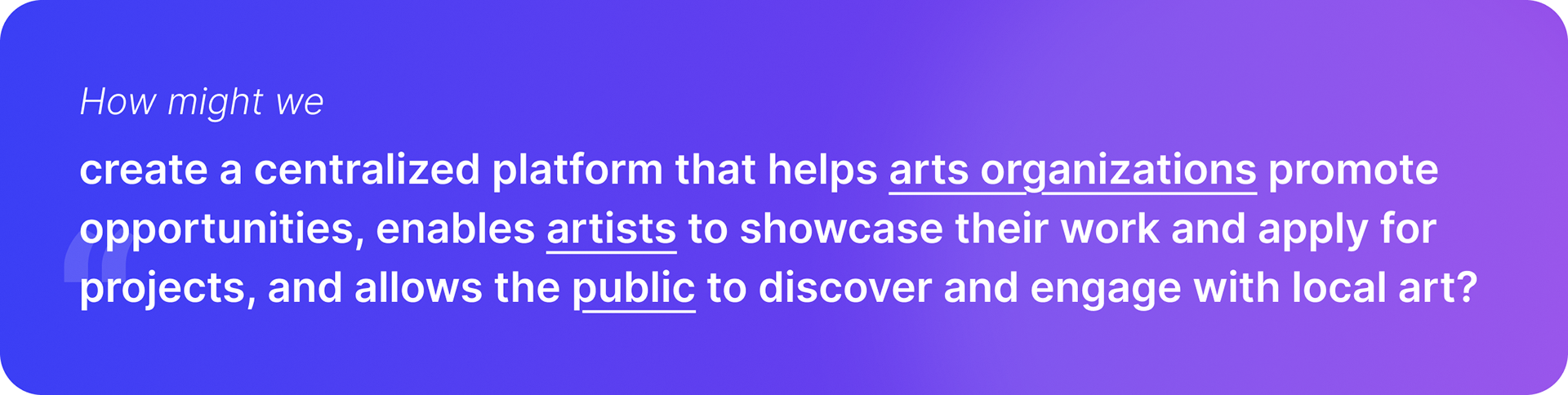
Public art opportunities, events, and artwork information are often scattered across multiple platforms, making it difficult for artists, arts organizations, and community members to connect.
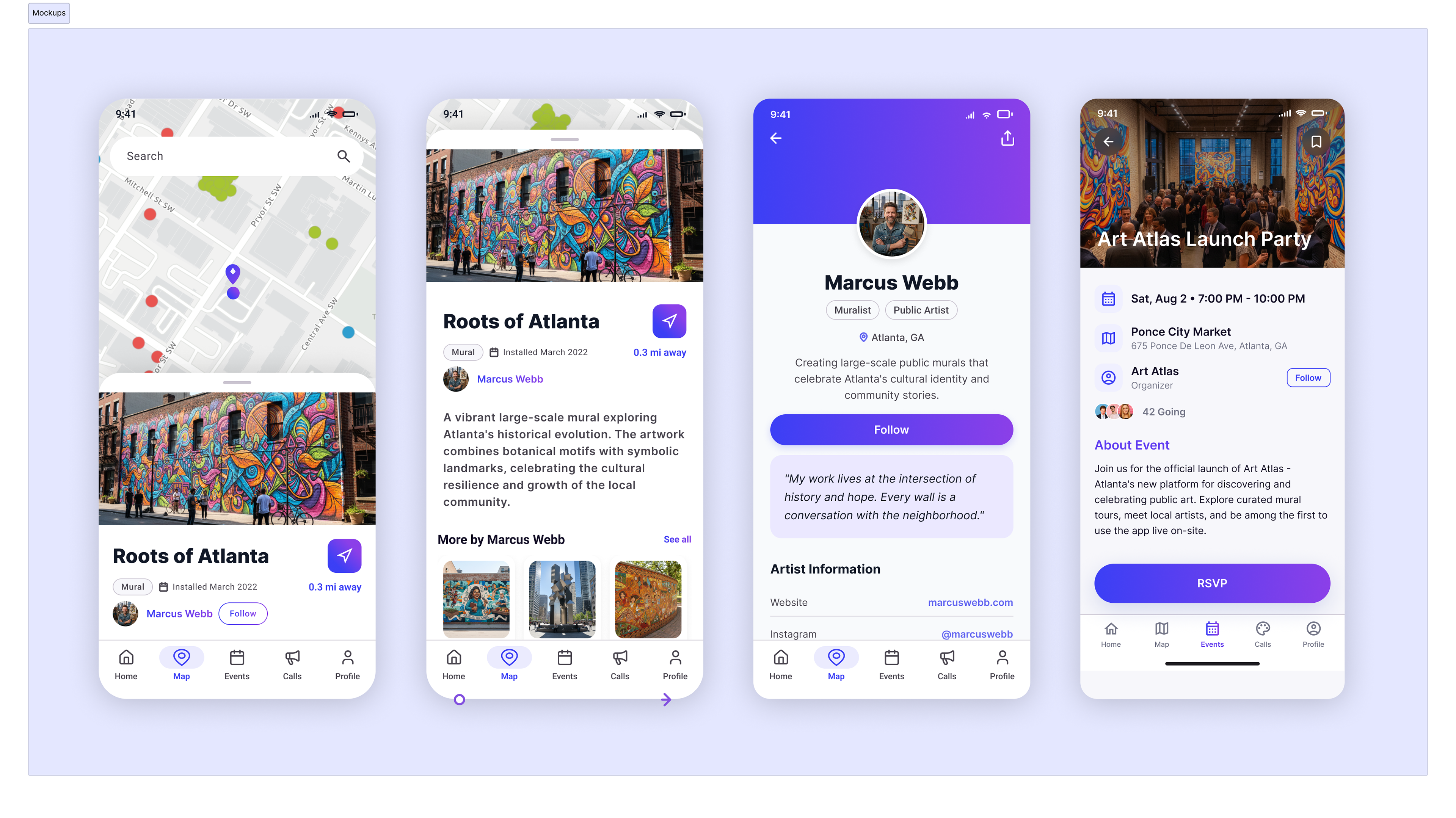
ArtAtlas was designed as a centralized platform that helps•:
• Arts organizations promote opportunities and events
• Artists discover opportunities and showcase their work
• Community members discover public art and engage with local culture
What began as a public art discovery app evolved into a platform supporting the broader public art ecosystem.
Problem
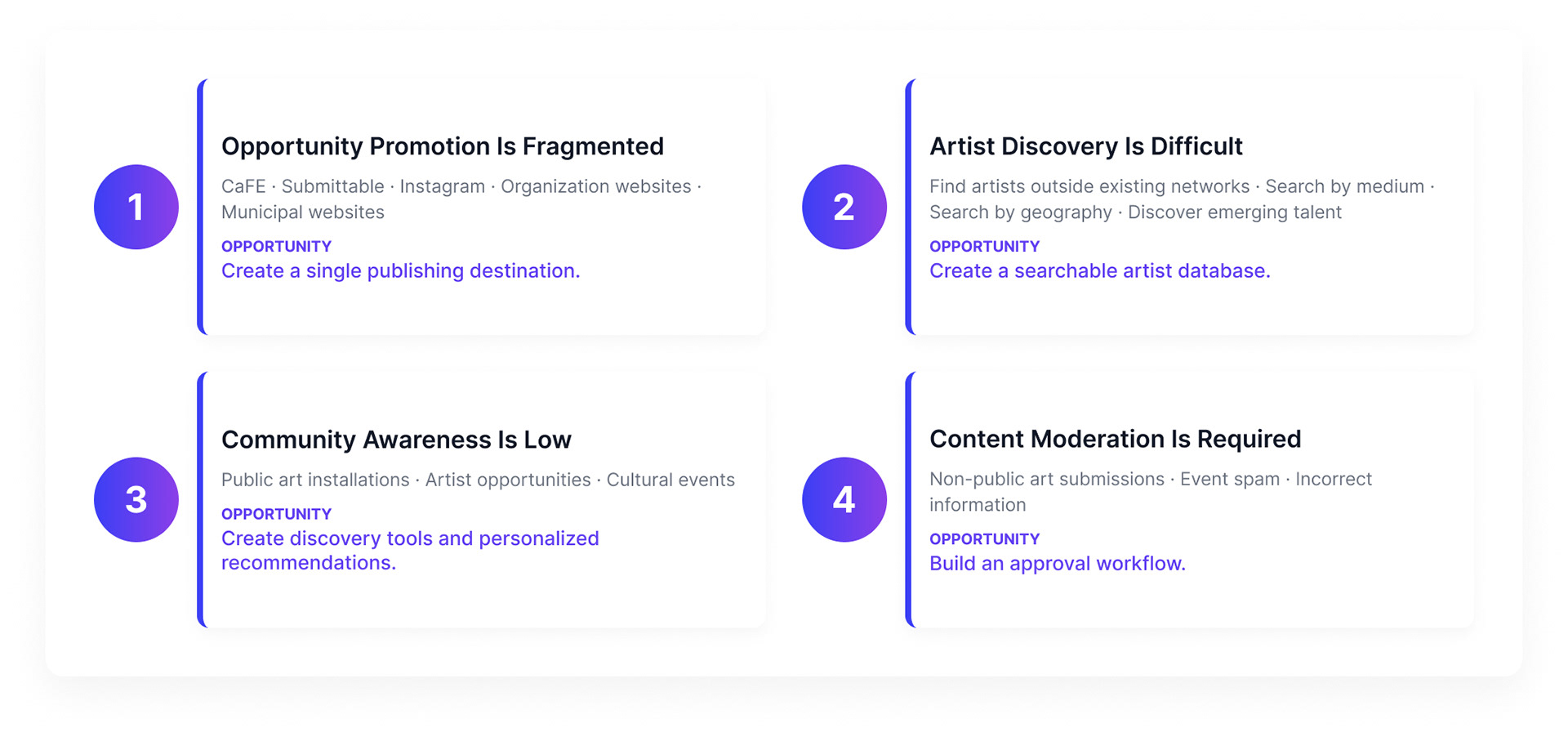
Through stakeholder interviews and domain research, I discovered that information about public art is fragmented across numerous platforms.
Artists search multiple websites to find opportunities.
Arts organizations repeatedly post opportunities across channels such as CaFÉ, Submittable, Instagram, organization websites, and municipal websites.
Community members often don't know where public art exists or how to learn about local artists and events.
Research
I interviewed stakeholders involved in Atlanta's public art ecosystem, including public art administrators.
One participant shared details about Fulton County's public art initiative:
• $2 million allocated to public art
• 33 libraries included
• Libraries categorized by large-scale sculpture or fine art installations
• Four rounds of artist calls
• Artists submitted five work samples
• Jury committees reviewed submissions and selected finalists
The challenge wasn't simply helping people find public art.
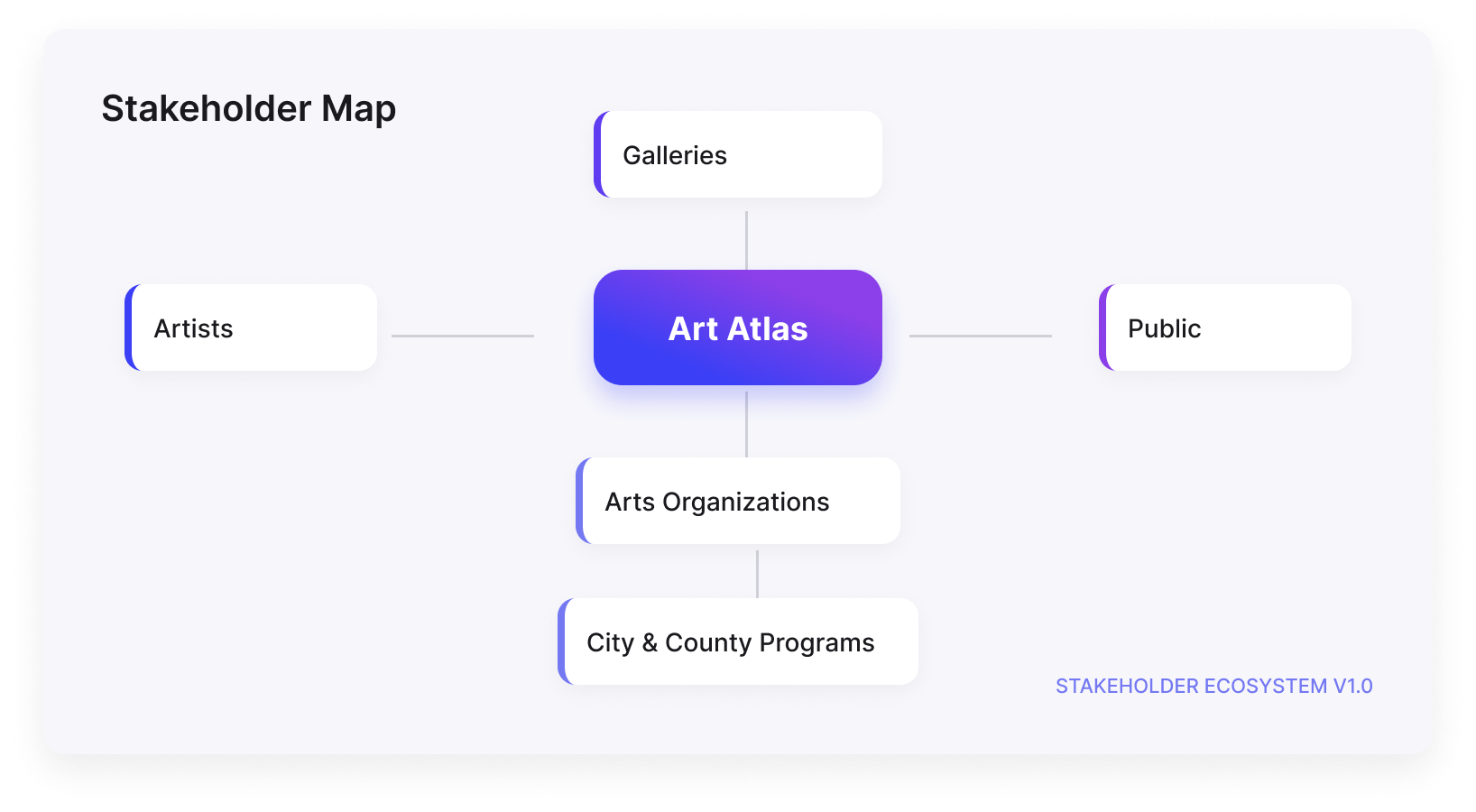
The larger opportunity was creating connections between administrators, artists, and community members.
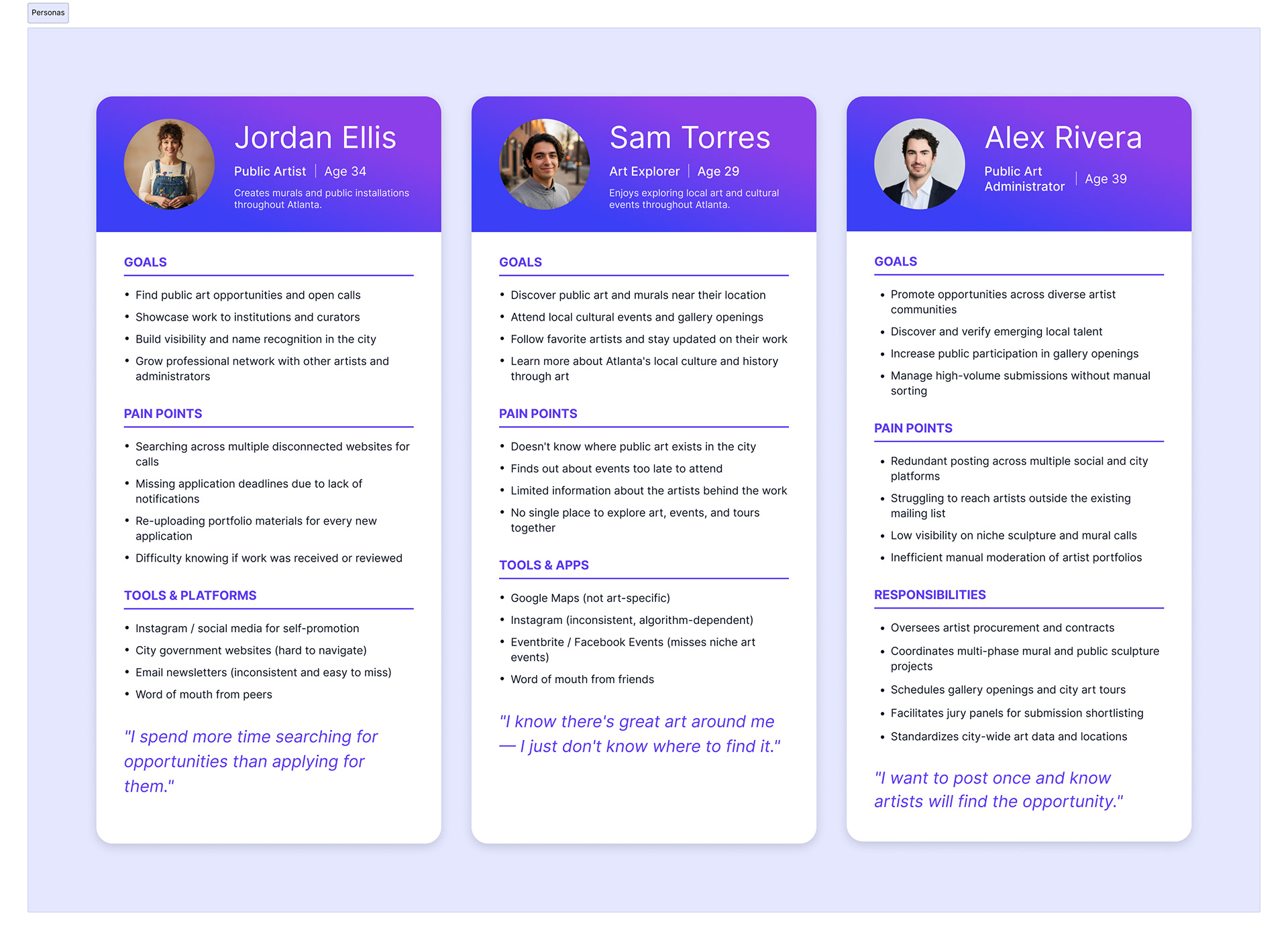
Three primary user groups emerged from research:
Product Strategy
Rather than designing a simple map application, I reframed the product as a platform serving three distinct user groups.
Each feature was mapped directly to a validated stakeholder need.
Information Architecture
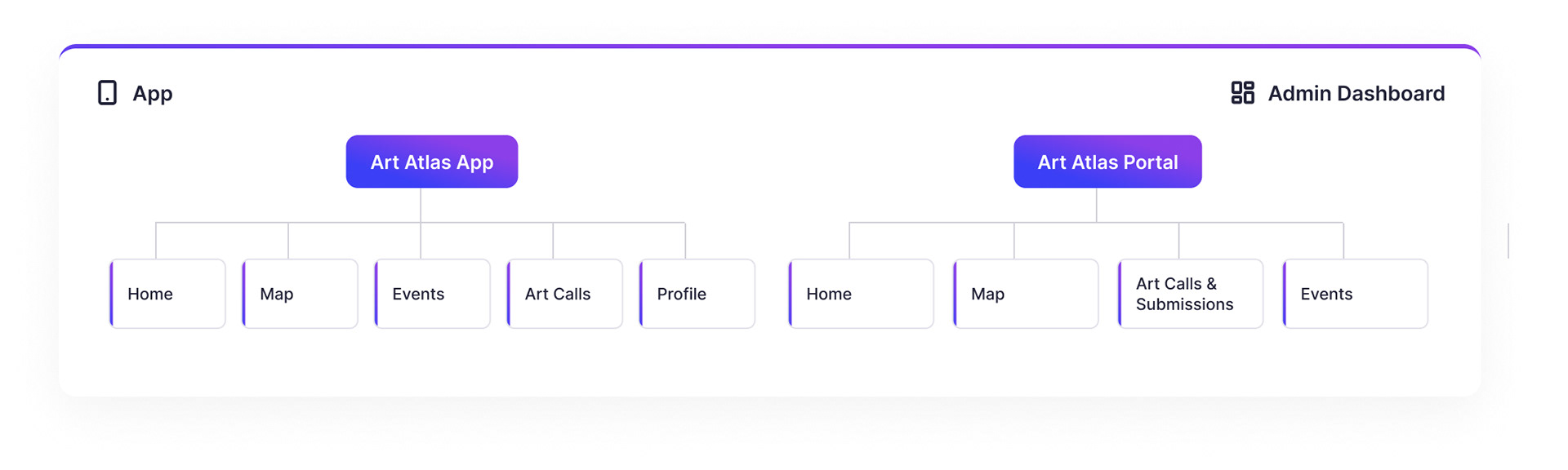
The architecture was designed around discovery and participation.
Users could move seamlessly between artwork, artists, events, and opportunities.
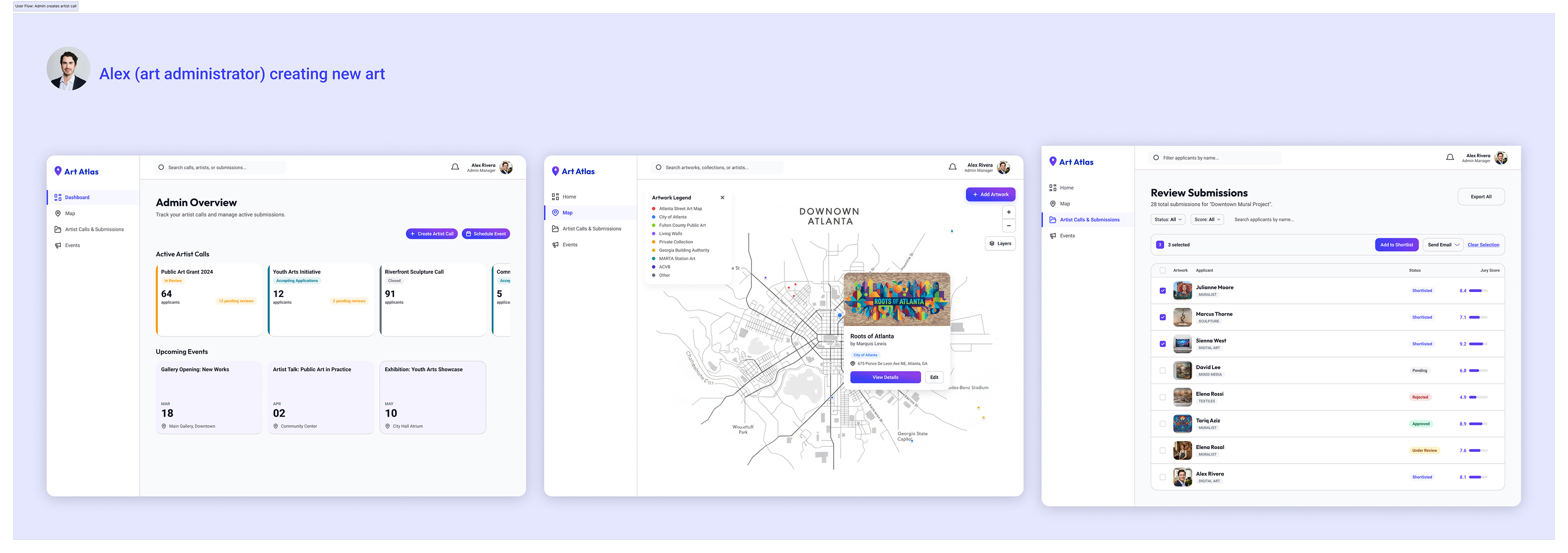
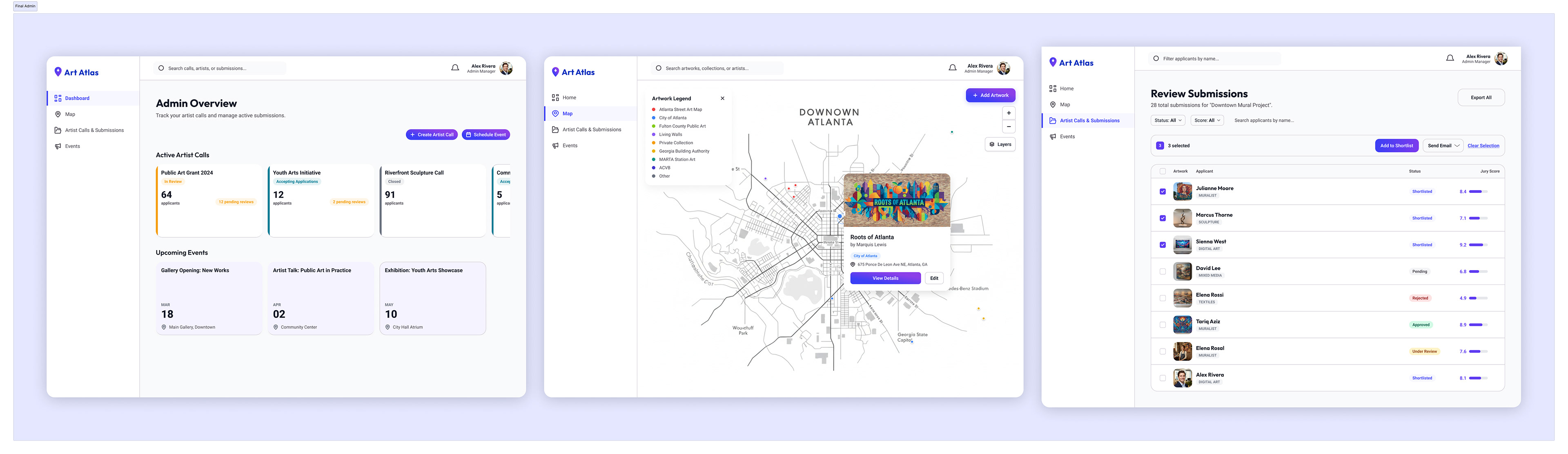
Administrators received a dedicated workspace for content management and moderation.
Design Approach
Because public art is inherently visual, participants struggled to provide meaningful feedback on low-fidelity wireframes.
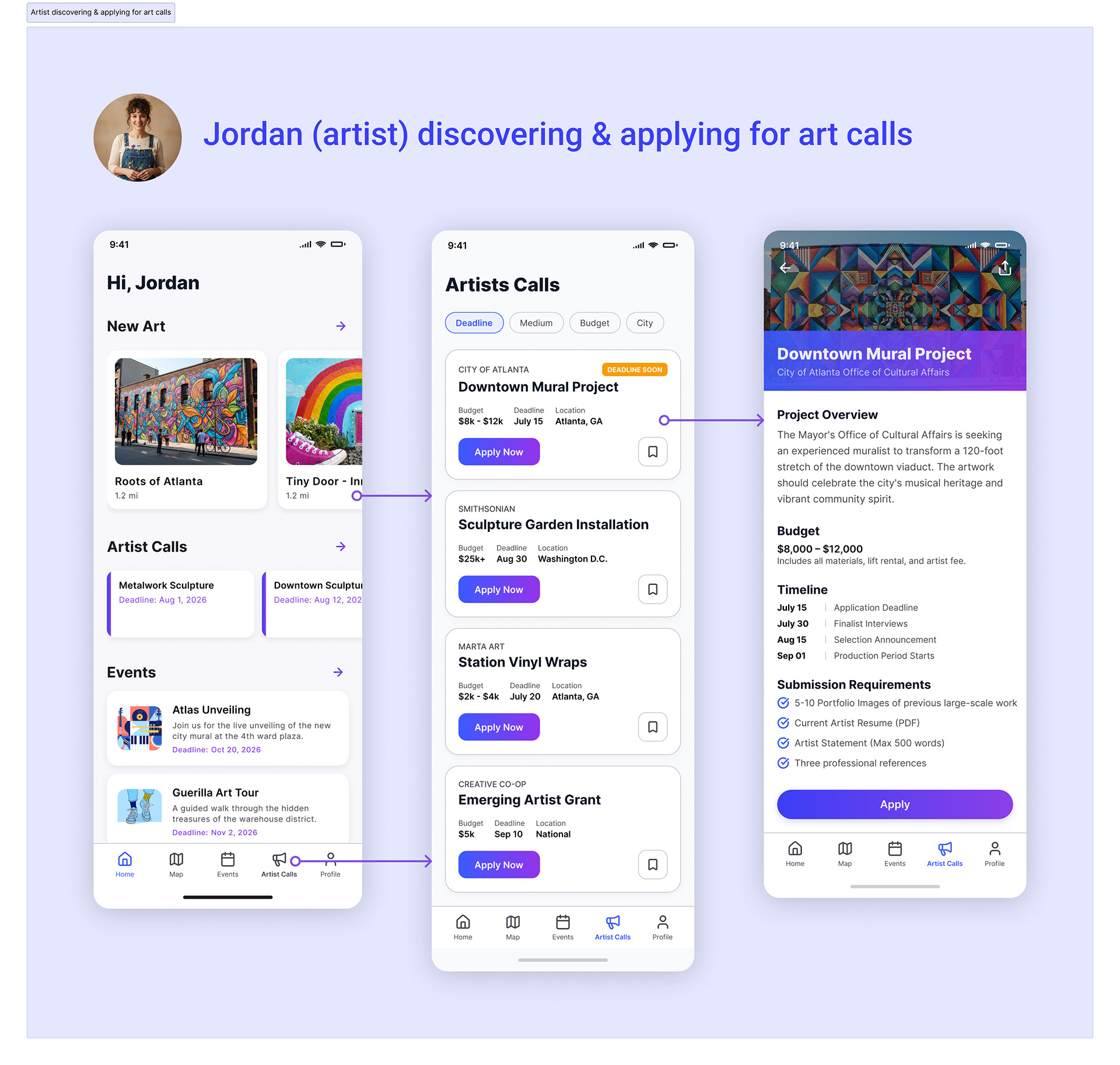
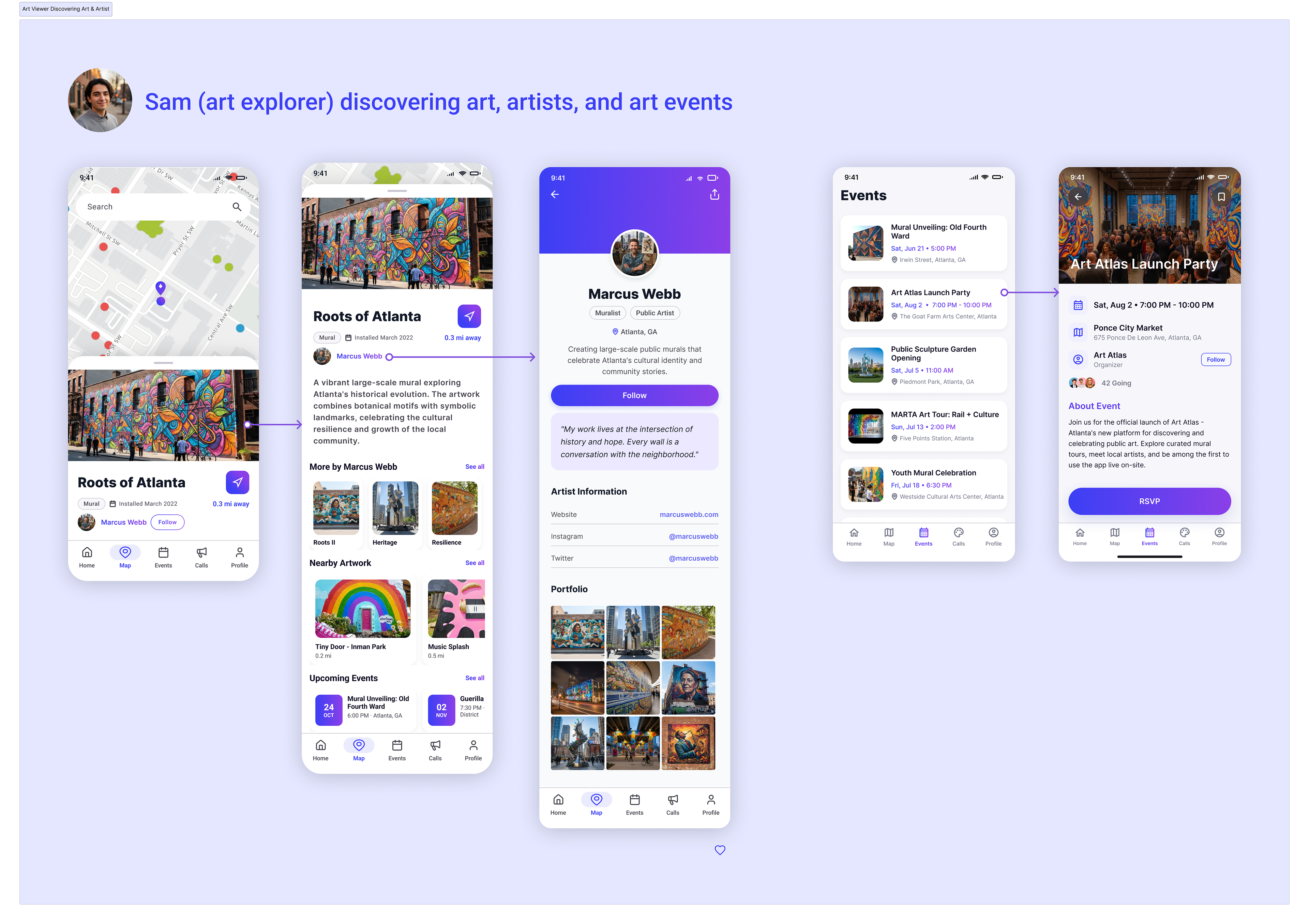
To better evaluate discovery, artwork presentation, and artist portfolios, I moved into high-fidelity prototyping earlier than usual.
This allowed users to interact with realistic artwork, event listings, and artist profiles, resulting in richer feedback throughout testing.
Usability Testing
Goals
Evaluate how users: Discover public art; Explore artists; Find events; Apply to opportunities
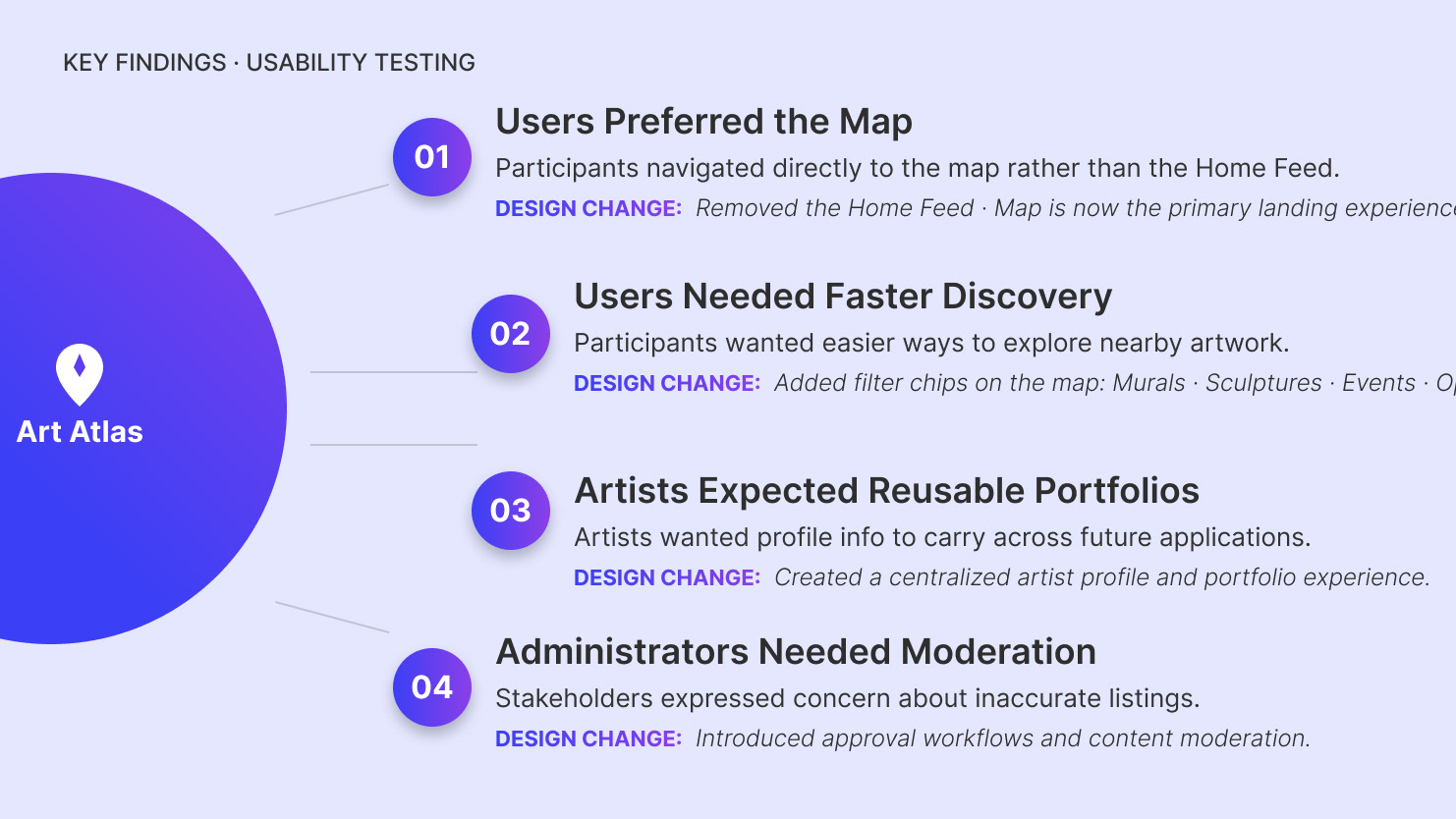
Key Findings
Iterations
Major Iteration: Feed First → Map First
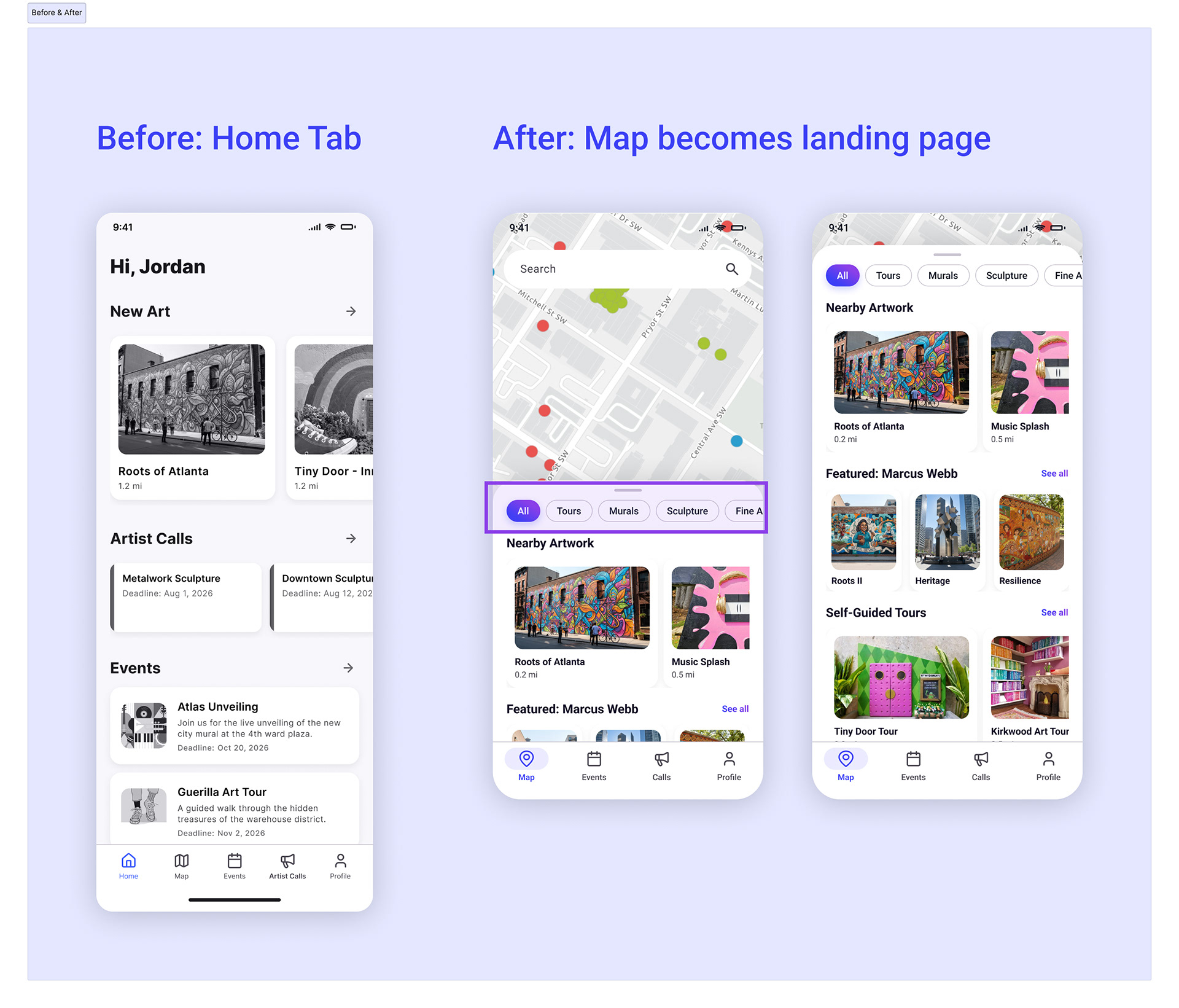
Before
The experience centered around a Home Feed containing:
Artwork posts; Events; Calls for Artists; Testing revealed that users rarely engaged with the feed because content updates were relatively infrequent.
After
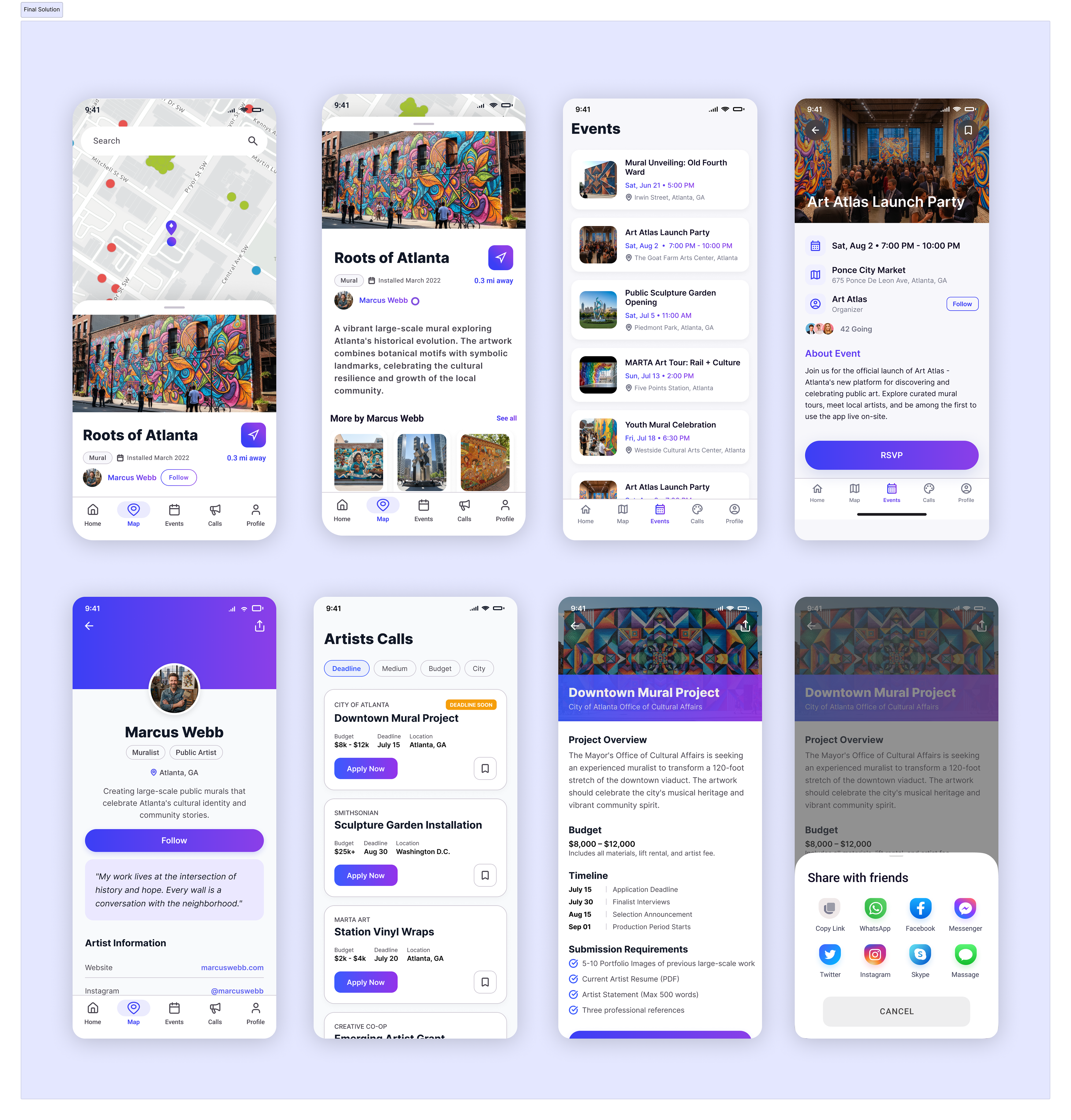
The map became the primary entry point into the platform. Users could immediately:
Discover nearby artwork; Explore artists; Find events; Navigate to installations
This shifted the experience from content consumption to place-based exploration.
Map Enhancements
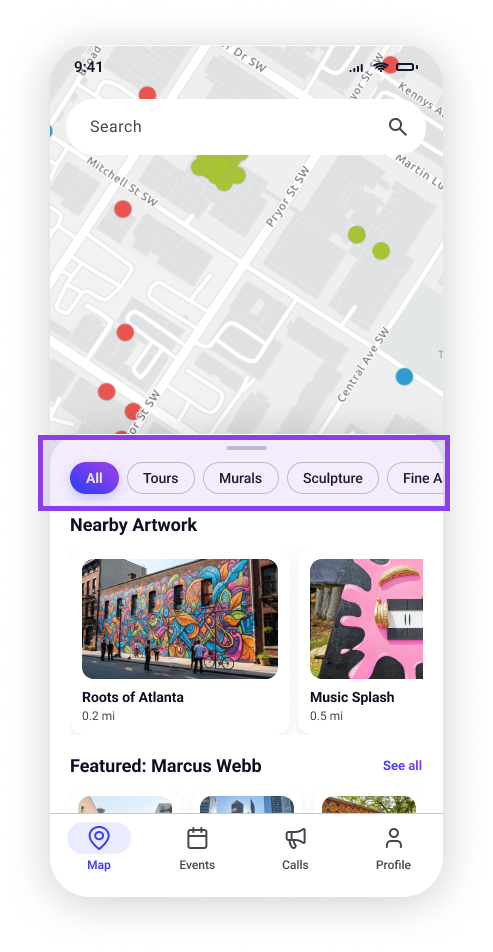
To improve discoverability, filter chips were added directly to the map experience.
This allowed users to quickly narrow results based on interests and encouraged deeper exploration of local public art.
Final Solution
Reflection
This project began as a public art discovery application but evolved into a platform supporting an entire public art ecosystem.
The most significant insight from testing was that discovery should be driven by place rather than content. Users consistently preferred exploring through a dynamic, location-based map instead of a traditional feed experience.
By shifting the product's focus to map-based exploration, ArtAtlas better aligned with how people naturally engage with public art in the real world.
Next Steps
Phase 1 focused on validating the experiences of artists and community members.
Future work will focus on the administrative experience, including:
Artist management workflows; Submission review processes; Event management tools; Opportunity publishing workflows; Content moderation improvements
The long-term vision is to create a platform that supports artists, arts organizations, and communities at the local, state, and national levels.
Thank you!